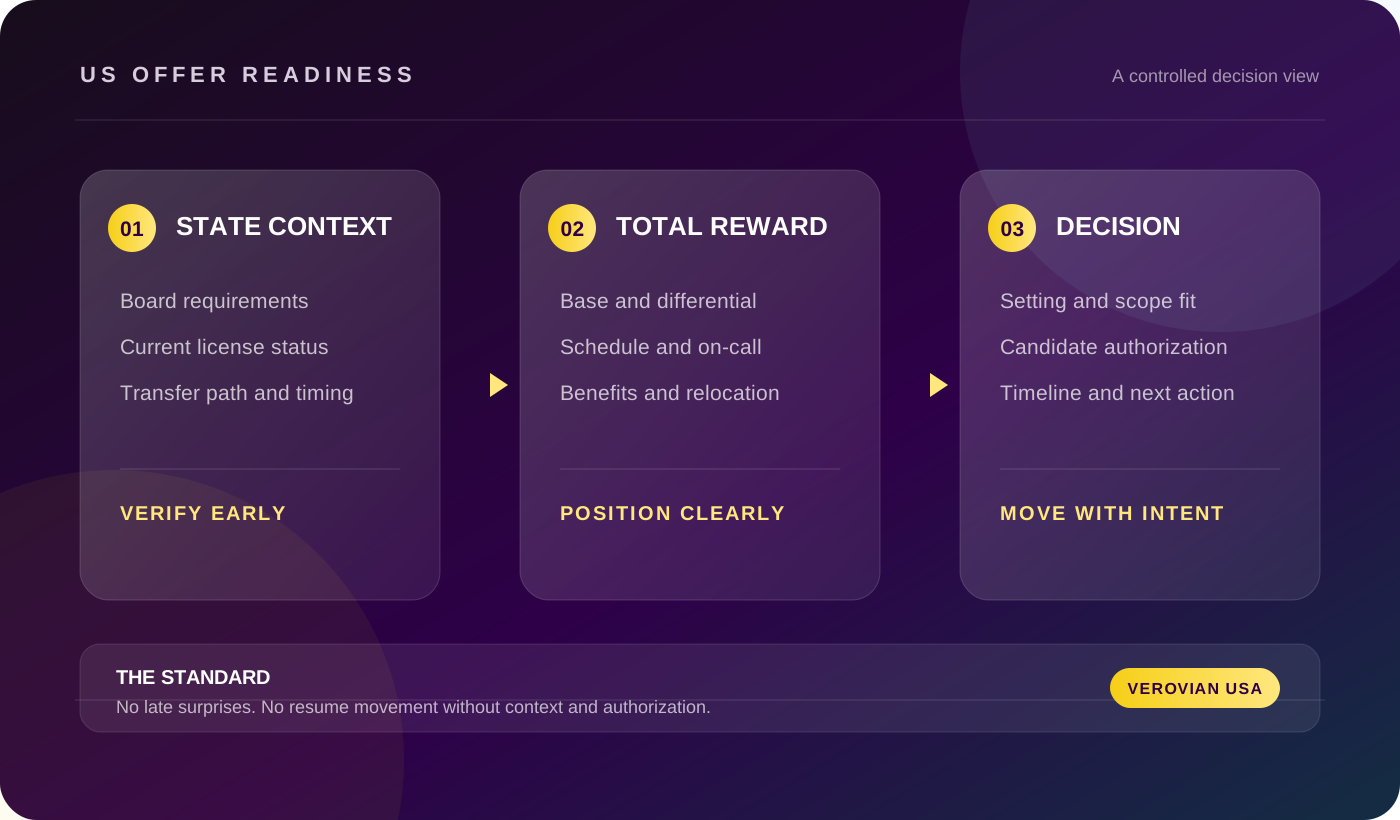
Start with the jurisdiction.
A national search should begin with the site, state and required start date. “Open to relocation” and “license in progress” are not operational statuses. Record the official pathway, required evidence, accountable owner and next decision date for every target jurisdiction.
Capture at the start
- Employing entity, worksite and state
- License required at application, offer and start
- Relevant board and official source link
- Examination or transfer route
- Employer onboarding dependencies
- Owner, next action and review date
Use three readiness states.
The required active license has been verified for the target jurisdiction. Employer onboarding checks may still remain.
The candidate has a documented pathway with named steps, evidence and a working timetable.
The candidate is interested, but the pathway or timing has not been validated.
A vague note such as “transferable” should never replace a board-specific readiness assessment.
This language helps hiring leaders see candidate quality and deployability separately. It also prevents an estimated timeline from being repeated later as a confirmed date.
Build the start date from dependencies.
Work backward from the desired start date. Account for board requirements, application review, examination eligibility, scheduling, results and employer onboarding. Treat every date as an estimate until the responsible authority confirms it.
Use the NABP list of participating jurisdictions and then confirm the jurisdiction's own requirements.
Keep role fit separate from license fit.
An experienced pharmacist may be an excellent long-term candidate without being immediately available in the target state. A transparent shortlist presents both judgments without weakening either one.
- Clinical and operational fit
- Leadership or setting fit
- Target-state license status
- Earliest evidence-based start window
- Remaining conditions, assumptions and risks
Maintain one stable license-readiness record.
Use a durable internal candidate ID, not a phone number, as the identity key. The record should include verified license details, source and verification date, target states, next actions and responsible owners.
Decision checklist
- Link directly to the target board
- Confirm whether MPJE, UMPJE or another route applies
- Verify status through an official source and date the check
- Separate estimated milestones from confirmed milestones
- Recheck before the agreed start
- Store personal and license data securely
License-readiness FAQ.
Does NABP eLTP grant a pharmacist license?
No. NABP facilitates the transfer process on behalf of participating boards, while the target jurisdiction makes the licensing decision and may have additional requirements.
Is UMPJE participation the same in every state?
No. Participation and transition dates vary. Check NABP's current participating-jurisdiction information and the target board's requirements.
Can shared phone numbers identify the same pharmacist?
No. Shared or placeholder contact details are not reliable identity keys. Each professional needs a stable internal record and separately verified evidence.
Primary sources used.
- NABP Electronic Licensure Transfer Program
- NABP MPJE and UMPJE overview
- NABP UMPJE participating jurisdictions
- US Bureau of Labor Statistics, Pharmacists
Reviewed July 25, 2026. This briefing supports workforce planning. It is not legal, regulatory or clinical advice. Confirm current requirements with the relevant board of pharmacy, regulator, legal adviser and employer policies.